What We Do
We design and build complex digital systems and integration platforms, taking responsibility for architecture and technical delivery.
Platform Engineering
Platform engineering enables organizations to standardize technology stacks, streamline development processes, and improve collaboration across teams. It delivers significant business value by driving efficiency, scalability, and innovation. It reduces infrastructure and operations costs, time-to-market through a consistent development experience and self-service within a secure, governed framework.
We design scalable platform architectures, API structures, and development frameworks that reduce complexity, establish governance, and ensure security baseline implementation. We utilize industry-standard DevOps practices and integration with cloud-native infrastructure.
We cover the full lifecycle of platform development — from business requirements gathering and system design to implementation, testing, and continuous optimisation — helping organizations modernize existing systems, build new digital capabilities, and support evolving business needs.
Cloud & Infrastructure Engineering
Modern IT systems rely on complex infrastructure spanning private, public, and hybrid cloud environments. While cloud simplifies certain operational aspects, it introduces new challenges related to architecture, vendor lock-in, and system complexity.
We design and implement infrastructure as code (IaC), develop cloud-native environments, and build application hosting platforms (PaaS) using modern cloud services. Our work includes infrastructure architecture and design, cloud migration strategies, re-architecting and re-engineering existing applications, automation and optimisation of infrastructure operations.
DevOps & Delivery Automation
DevOps expertise enables organizations to build efficient and flexible delivery processes that support multiple projects without excessive operational overhead.
We implement CI/CD pipelines, infrastructure as code (IaC), automated testing and deployment, as well as monitoring and logging solutions that ensure reliability and operational transparency. This allows teams to accelerate delivery while maintaining consistency, stability, and control across environments.
Security & Compliance
Cybersecurity requires a systematic approach across all layers of the platform.
We integrate security into architecture and delivery processes, ensuring secure infrastructure setup, protection of applications, and compliance with enterprise standards.
Our approach includes secure architecture design, continuous monitoring, and reporting solutions that increase visibility, awareness, and control over security risks.
Key benefits:
- Reduced infrastructure and operations costs.
- Standardized tech stack and platform solutions.
- Unified developer experience and self-service.
- Scalable cloud-native platform environments.
AI Integration and AIOps
AI-driven IT Operations (AIOps) solutions are becoming essential in modern enterprise environments, where both human-generated and automated tickets (from scans, alerts, and monitoring routines) can quickly overwhelm operations teams.
We help organizations introduce AI into existing digital products and business processes where it can deliver practical, measurable value. Our work covers use-case assessment, solution architecture, implementation, and ongoing improvement, ensuring each solution fits the client’s technology environment and operational needs.
We design and deliver a production-grade AIOps platform for enterprise clients to streamline IT operations and manage high volumes of human-generated and automated tickets. Our solution introduces an AI-driven orchestration layer that analyzes incoming requests and dynamically routes them to specialized agents. Knowledge-based queries are handled using retrieval-augmented generation (RAG), providing accurate, source-backed answers from internal documentation without requiring model retraining. When confidence is low, tickets are escalated to human operators to ensure reliability. For alert-driven incidents, the platform leverages agents capable of analyzing logs, system state, and telemetry data to diagnose issues, recommend remediation steps, and identify responsible teams.
By combining AI with structured enterprise workflows, the solution transforms traditional ticket handling into a scalable, automated process – reducing response times, minimizing manual effort, and improving operational efficiency.
Key benefits:
- Faster incident triage and response.
- Reduced operational workload.
- RAG-based access to internal documentation.
- Automated routing to responsible teams.
API Management and Integration

APIs form the foundation for communication between applications, services, data sources, and external partners. As API ecosystems grow, organizations need a consistent approach across the API lifecycle — from design and publication to security, monitoring, and ongoing management.
We design and build the automation, integration, and orchestration layers that turn API management products into practical enterprise services. Our work includes self-service and developer portals, standardized API workflows, and integration with existing engineering processes through CI/CD pipelines, command-line tools, and REST interfaces.
We embed these capabilities into the client’s technical and governance landscape, enabling engineering teams to create and consume APIs consistently while giving platform teams centralized visibility and control over access, standards, and operations. This supports reliable data flow and interoperability across connected systems and allows the API ecosystem to evolve within a governed framework.
Key Benefits:
- Faster delivery of APIs and integration services.
- Reduced operational workload and faster issue resolution through automation and monitoring.
- Consistent security and governance across API ecosystems.
- Improved developer experience across environments.
Web Portals and Data Visualization
We design and build custom dashboards, web portals, and data-intensive applications that bring together information from multiple enterprise systems and present it through consistent, intuitive user experiences. Our work combines frontend engineering, backend API development, modular architecture, and UX- driven design to create solutions that are scalable, maintainable, and easy to extend.
Custom Dashboards
We create tailored dashboards for areas such as DevSecOps, IT operations, engineering performance, service management, and organizational capability tracking. These dashboards help teams understand status, trends, risks, historical patterns, and raw operational data without switching between disconnected tools.
For DevSecOps use cases, we can combine data from Jira, ServiceNow, Azure DevOps, Bamboo, Confluence, SonarQube, and other systems into a unified view of delivery velocity, quality, operational efficiency, and security posture. Data is collected, normalized, and presented through reusable metric widgets that allow dashboards to be assembled and adapted quickly.
Unified Web Portals
We help clients rapidly deliver web portals for different IT and business services while preserving a consistent user experience across the organization. This includes modernizing legacy interfaces, identifying common design and engineering patterns, building reusable component libraries, and creating portal foundations that multiple teams can use.
For data-heavy scenarios, we build high-density data grids with advanced filtering, drill-down views, virtual scrolling, and export capabilities, enabling users to explore large datasets efficiently.
Key Benefits:
- Clear data visibility across multiple enterprise systems.
- Faster portal delivery through modular architecture and reusable components.
- Efficient exploration of large datasets with filtering, drill-down, and export.
Business Applications
Business applications can automate routine processes, improve visibility across departments, reduce operational bottlenecks, and give teams faster access to the information they need. They may include workflow platforms, internal portals, customer self-service applications, operational systems, reporting interfaces, dashboards, control panels, and other data-driven tools that turn business data into practical, actionable insight.
The value of business applications lies in creating digital systems that reflect how the business actually works, support future growth, reduce reliance on manual operations, and make business processes easier to manage, measure, and improve.
By combining business analysis, engineering expertise, user experience design, and long-term operational support, we help clients build applications that are practical, maintainable, and aligned with measurable business outcomes.
Key Benefits:
- Higher operational efficiency.
- Better control over business processes.
- Faster and more informed decision-making.
- Improved scalability and business flexibility.
Axway Integration

As a certified partner of Axway, we deliver industry-leading solutions that drive digital innovation. Our expertise in Axway Amplify products ensures a seamless implementation process, tailored to meet your organization’s unique needs.
We support organizations across the full Axway Amplify implementation journey — from installation and configuration to architecture design and product integration. Our team helps establish the technical foundation required to deploy and operate Axway products within the client’s existing environment.
Leveraging Axway products, we design scalable hybrid architectures that integrate on-premises environments and cloud hosting. Whether you are modernizing legacy systems or launching new digital initiatives, Axway-based hybrid solutions provide the flexibility and reliability required to support evolving business needs.
Using Axway’s integrated analytics capabilities, we help clients improve API performance visibility and provide comprehensive documentation and testing environments for API consumers.
Key benefits:
- Faster adoption of Axway Amplify products.
- Flexible deployment across on-premises and cloud environments.
- Improved visibility into API performance through Axway analytics.
Database Automation Platform
Managing databases across multiple cloud providers and on-premises infrastructure creates operational complexity, inconsistent processes, and limited visibility. As database environments grow, platform and infrastructure teams face increasing pressure to maintain security, governance, performance, and availability while supporting faster application delivery.
Sitecraft’s Database Automation Platform (DBAP) provides a unified control plane for managing and automating database operations across AWS, Microsoft Azure, Google Cloud, and on-premises environments. It brings existing databases under centralized management without requiring migration, while remaining outside the application data path.
DBAP combines database discovery and inventory, policy-driven self-service provisioning, lifecycle automation, monitoring, security controls, and backup and recovery management. Advanced capabilities include recovery validation, point-in-time restoration, disaster recovery, and database migration workflows for supported configurations.
The platform integrates with existing engineering workflows through APIs, CLI, Terraform, CI/CD pipelines, Kubernetes operators, and developer portals such as Backstage and Port. It supports SaaS-based and self-hosted deployment models. Available capabilities, integrations, and supported configurations are defined during discovery, with environment-specific engineering where required.
Key benefits:
- Simpler Developer Workflows: Standardized self-service workflows help developers access databases faster while reducing routine DBA effort.
- Consistent Operations and Governance: A common operating model, lifecycle automation, and right-sizing help reduce operational overhead and control costs.
- Better Visibility and Audit Evidence: Centralized activity records, policy checks, and verified restores help teams prepare audit evidence and identify security and backup gaps.
Implementation Approach
DBAP follows a phased implementation approach, starting with read-only discovery to establish visibility into the existing database estate. As the rollout progresses, organizations can introduce governance policies, validate backup and recovery processes, and gradually expand into self-service provisioning and operational automation. More advanced capabilities, including database migration and disaster recovery workflows, can be introduced in later stages based on business priorities and technical requirements.
Explore DBAP in Action
Discover how Sitecraft’s Database Automation Platform works by watching our DBAP overview video. To explore the platform firsthand, request access to our live demo by contacting us at info@sitecraft.co.
MCP Adoption Framework

As organizations accelerate AI adoption, unmanaged MCP servers, fragmented integrations, and inconsistent access controls introduce new security and governance challenges. We help enterprises adopt Model Context Protocol (MCP) safely and at scale, transforming isolated MCP initiatives into a secure, governed enterprise capability.
Our MCP Adoption Framework brings together seven core capabilities: a private MCP registry, AI gateway, identity and access management, device and endpoint controls, network policies, observability and audit, governance and lifecycle management. Together, they establish centralized control over how AI agents and developer tools access internal systems, third-party services, and AI models.
Rather than prescribing a specific technology stack, we assess the client’s existing environment, reuse available platforms, and introduce new components only where necessary. Our approach covers the full adoption lifecycle — from initial assessment and architecture design to implementation, organization-wide rollout, and optional ongoing operations.
We embed DevSecOps practices throughout the framework to automate onboarding, enforce security policies, and continuously verify compliance. Centralized audit trails, proprietary data protection, and AI token usage controls provide the visibility and governance needed to manage risks, control costs, and sustain MCP adoption as it scales.
Key benefits:
-
Secure and governed access to internal and third-party MCP services.
-
Reduced risk of sensitive data exposure and unauthorized integrations.
-
Centralized visibility, auditability, and AI token cost control.
-
Faster MCP adoption through standardized workflows and reuse of existing platforms.
MCP Governance and Risk Assessment
Find out where your organization stands on secure MCP and AI agent adoption. Complete our 20-question assessment to identify potential gaps and receive a PDF report with your results and recommended next steps.
Recent Projects
API Management Platform
View All Projects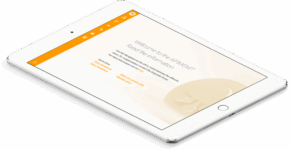
Platforms Operations Solution
View All Projects
Technology Management Solution
View All Projects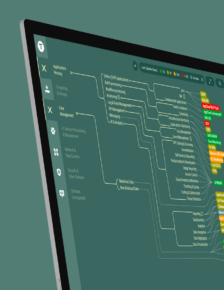
Engineering Portal
View All Projects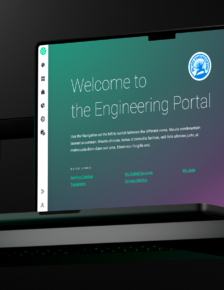
© 2016 - 2026 sitecraft.co